Parvin Begum
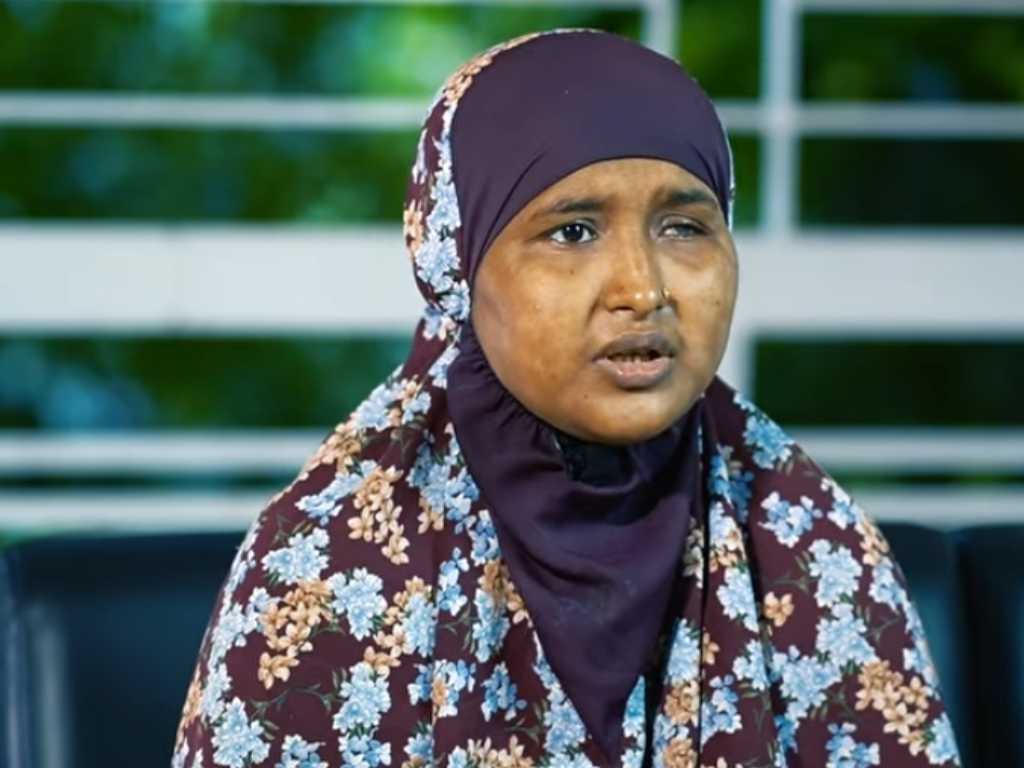
- Parvin Begum
- 29059
- A
- 248
- 30 years old
- Day laborer
- 5 members
- Jatrabari, Dhaka, Bangladesh
A Brief Background and Experience During the July 2024 Uprising
Before her life was completely upended by the July Mass Uprising, 30-year-old Parvin Begum lived a modest life in Dhaka’s bustling Jatrabari area. Originally hailing from Noakhali, she worked tirelessly to support her family, including her two children. On that July 18, 2024 fateful morning, she had gone out as usual for work. However, by the time she tried to return home, the streets had completely shut down due to the raging protests, leaving no vehicles or public transport available. Parvin cautiously began the long journey home on foot.
As she was navigating through Jatrabari, she stumbled upon a horrifying scene: a street littered with fallen, injured protestors. Amidst the carnage, a heavily bloodied young man caught her eye. Spotting Parvin, the young man desperately called out to her, crying, “My mother has no one but me. Please save me. Please take me to a hospital.” She was overcome with deep empathy and rushed to his side, determined to pull him out from the pile of bodies. Being a lone woman, she struggled to muster the physical strength needed to haul a full-grown young man, straining and exerting every ounce of her energy.
Just as she managed to lift him, a squad of 10 to 12 police officers suddenly emerged from a nearby alley. Sensing immediate danger, Parvin raised her left hand to signal them, pleading with them not to shoot. Desperate to rescue the boy, she draped his arm over her shoulder to carry him across the street. In that split second, the police opened fire, riddling the boy’s body with bullets. Simultaneously, an officer took a side position, aimed directly at Parvin, and fired. As she instinctively ducked to evade a second shot, the bullet struck her squarely in the left eye. Blood began to spurt violently from her eye, “like water from a toy squirt gun.” Trembling with shock and weakened by the sudden blood loss, Parveen collapsed heavily to the ground, and the boy fell right on top of her. As he lay over her, the young man gave one final, violent shiver and took his last breath. Parvin watched the life escape his body before she, too, lost consciousness.
The fleeing protesters spotted her and the young man on her lap. They quickly coordinated to lift both bodies, realization dawning on them that the boy had already expired. They rushed Parvin and the deceased boy into a CNG auto-rickshaw, sending them straight to Dhaka Medical College Hospital (DMCH).
Upon arriving at DMCH, Parvin’s ordeal only deepened into an agonizing nightmare. The hospital staff severely neglected her, failing to even stop her continuous bleeding. A simple eye drop worth BDT 250 could have halted the hemorrhage, but Parvin had lost her handbag—containing all her hard-earned money while trying to save the boy. Left completely penniless and stranded in deep uncertainty, fellow protestors around her admitted they hadn’t carried cash into the streets either. Fortunately, a compassionate visitor noticed her plight and agreed to cover her immediate medical expenses. While the expensive drops finally stopped the bleeding, the hospital provided no further emergency care or specialized surgery, leaving her stranded on a bed. Parvin bitterly recalls that if she had received immediate, advanced medical attention instead of being cast aside after the bleeding stopped, her permanent damage could have been greatly minimized.
Beyond the physical trauma, a painful social battle awaited her upon returning to her community. In rural and close-knit neighborhoods, social life requires constant interaction, especially when taking her children to and from school. Instead of receiving empathy, Parvin began facing cruel social stigma and cutting remarks from neighbors. Rather than addressing her by her name, people began calling her “Kanee”, a mockery that hurts her deeply, piercing through her dignity far more than her physical scars.
Rehabilitation Journey and Support from Aparajito-24 Foundation
Left to deal with total blindness in her left eye and deep emotional scars, Parvin’s path to recovery seemed entirely blocked until the Bangladesh Legal Aid and Services Trust (BLAST) identified her case and connected her with the Aparajito-24 Foundation.
The Foundation immediately took charge of her medical rehabilitation. Acting on the expert advice of specialized ophthalmologists, the Foundation coordinated with the Vision Eye Hospital to perform a critical corneal transplant surgery. To make the procedure possible, Aparajito-24 Foundation went to the extraordinary length of importing cornea from Sri Lanka. Following the intricate surgery, the Foundation ensured she received uninterrupted post-operative care, fully financing her regular doctor check-ups and specialized medications.
Recognizing the immense psychological trauma of watching a young boy die in her arms and enduring cruel community shaming, the Foundation also enrolled Parvin in regular mental health and psychosocial support sessions. This continuous counseling helped her process her grief and rebuild her fractured self-esteem. Furthermore, the Foundation stepped in to ease her family’s crushing economic burdens, assisted with the documentation needed for government gazette enlistment and provided a full month’s worth of food supplies during the holy month of Ramadan. As a result, she has secured the classification of Category A, enabling her to get monthly allowance from the government. Today, the Foundation continues to provide comprehensive, ongoing care to ensure her physical and emotional well-being.
Her unyielding courage shone brightly once again on 4 August 2025, when she traveled to the International Crimes Tribunal (ICT) to testify against the atrocities of the fallen regime of Sheikh Hasina. She was an exemplary witness in the case against Sheikh Hasina herself. Though her voice carried immense pain, her heart burned with an unquenchable thirst for justice. Perhaps this occasion provided somewhat of a closure of the immense pain caused on that fateful day
Current Situation and Future Aspirations
Today, Parvin Begum lives as a true symbol of humanitarian sacrifice, navigating the realities of permanent vision loss in one eye while courageously confronting the daily challenges of social prejudice. Thanks to the timely surgical intervention and the imported cornea arranged by the Foundation, her health has stabilized, though she requires continuous monitoring to protect her overall well-being.
Despite the financial hardships of her household and the lingering pain of the insults she faces in her neighborhood, Parvin’s spirit remains entirely unbowed. Her primary focus remains the future and education of her two children, for whom she braves the cruel taunts of her community every single day.
Looking forward, Parvin aspires to build a secure, dignified life where her children can hold their heads high, free from financial insecurity and social stigma. The Aparajito-24 Foundation remains committed to standing by her side, seeking out further resources to support her livelihood and long-term independence. Parvin’s journey stands as a breathtaking testament to extraordinary human empathy, the story of a mother who risked everything to save a complete stranger.